
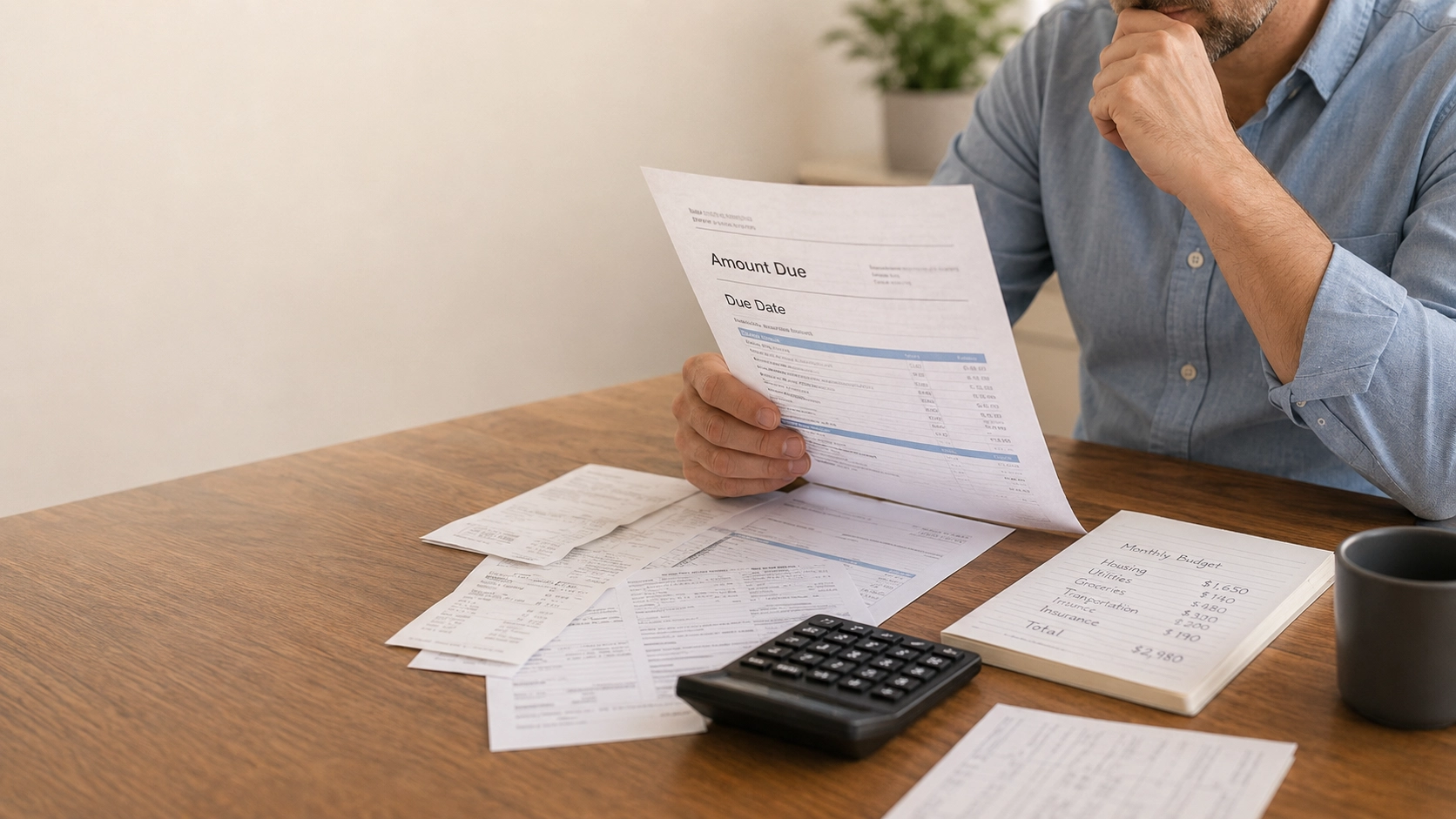
Finding out that you owe more in taxes than you can afford to pay can be stressful.
Some taxpayers respond by delaying their return until they have enough money to cover the full balance. Unfortunately, waiting to file may make the situation more expensive.
Even if you cannot pay your taxes in full, filing your return on time can help you avoid additional penalties and keep more options available.
Watch: Why filing on time still matters
The IRS recommends filing your tax return by the deadline and paying as much as you reasonably can, even when you cannot pay the entire balance.
Filing and paying are two separate obligations
Filing your tax return and paying the tax you owe are related, but they are not the same requirement.
Your tax return reports your income, deductions, credits, and final tax liability. The payment settles the balance shown on that return.
Not having enough money to pay does not remove the requirement to file. Delaying the return may expose you to a failure-to-file penalty in addition to the penalties and interest associated with the unpaid balance.
Filing late can be more costly than paying late
The failure-to-file penalty is generally more severe than the standard failure-to-pay penalty.
The IRS typically calculates the failure-to-file penalty at 5% of the unpaid tax for each month or partial month the return is late, up to a maximum of 25%. The usual failure-to-pay penalty is generally 0.5% of the unpaid balance per month, also subject to a maximum.
That does not mean an unpaid balance should be ignored. Interest and applicable penalties generally continue to accrue until the amount is paid.
However, filing on time can help prevent a difficult tax bill from becoming even larger.
Pay what you reasonably can
You do not have to choose between paying the entire balance and paying nothing.
Making a partial payment reduces the unpaid balance on which future penalties and interest may be calculated. The IRS advises taxpayers to file on time and pay as much as they can by the deadline.
Before using savings, borrowing money, or making a payment that could disrupt essential household or business expenses, consider discussing the situation with a tax professional.
The goal should be to address the liability without creating a second financial emergency.
An extension to file is not an extension to pay
A filing extension gives you additional time to submit your completed tax return.
It does not extend the deadline for paying the tax you expect to owe. Penalties and interest may still apply to an unpaid balance after the original payment deadline.
If your return is not ready, requesting a valid extension can help protect you from filing late. You should still estimate your liability carefully and pay what you can by the original deadline.
Payment arrangements may be available
The IRS offers several possible arrangements for taxpayers who cannot immediately pay their balances in full.
Depending on the amount owed and the taxpayer’s circumstances, these may include short-term payment arrangements or longer-term installment agreements. Interest and applicable penalties generally continue to accrue while a balance remains unpaid.
A payment plan should be affordable enough to maintain while allowing you to remain current with future tax obligations.
Choosing an unrealistic monthly payment may create further difficulties later. Before committing to an arrangement, it can be helpful to review your income, necessary expenses, and upcoming tax obligations with an experienced professional.
Do not ignore the balance after filing
Filing the return is an important first step, but it does not resolve the unpaid liability by itself.
Once the return has been filed, you should address the remaining balance promptly. Leaving IRS notices unopened or failing to respond may reduce your available options and allow the amount owed to grow.
If your financial position changes and you are unable to maintain an existing payment agreement, contact the IRS or your tax professional promptly rather than simply missing payments.
Get help before the problem grows
Owing the IRS can feel overwhelming, but avoiding the return usually makes the situation harder.
The practical starting point is to file on time, pay what you reasonably can, and develop a plan for addressing the remaining balance.
Torkelson & Associates CPAs can help you understand the amount owed, evaluate possible payment arrangements, and communicate with the IRS when appropriate.
Contact Torkelson & Associates CPAs to discuss your tax balance and the options that may be available.